# Inbound/Outbound Queue Restart Automation

The customer’s end-to-end business often requires the sending and receiving of transactions across SAP systems via synchronous/asynchronous messages stored in queues, otherwise known as qRFC/tRFC (queue/transactional Remote Function calls). Failures on the inbound or outbound queues can cause delays and disruptions in critical business processes.

IT-Conductor allows users to automate the restarting of Inbound/Outbound (SYSFAIL, RETRY, CPIERR, and RUNNING) queues. It can be applied to one or more systems and can be run manually or on a schedule. This feature is highly adaptable to any customer environment and can become essential to IT maintenance operations.

### Prerequisites

* The system should be registered in IT-Conductor for monitoring.

<figure><img src="https://377464071-files.gitbook.io/~/files/v0/b/gitbook-x-prod.appspot.com/o/spaces%2FXhp08OmU8050PePmMgDt%2Fuploads%2FQum4yzh3bJgCAoeZXUGq%2FSAP%20System%20in%20IT-Conductor%20Service%20Grid.png?alt=media&#x26;token=388c84e0-5dcc-473e-a4cd-fbf804b160cd" alt=""><figcaption><p>Figure 1: SAP System in IT-Conductor Service Grid</p></figcaption></figure>

* A [Robot User](https://docs.itconductor.com/user-guide/account-administration/create-robot-users) should be created and associated with the application/DB/OS users with assigned roles/privileges to execute the local action on the system to be stopped/started.

  <figure><img src="https://377464071-files.gitbook.io/~/files/v0/b/gitbook-x-prod.appspot.com/o/spaces%2FXhp08OmU8050PePmMgDt%2Fuploads%2FEmOPTpaMQJaZN1HUMytC%2Fimage.png?alt=media&#x26;token=c57683e2-c953-45d9-b13c-e8dda4df1d81" alt=""><figcaption><p>Figure 2: Start/Stop Process Definitions</p></figcaption></figure>
* The ownership of the process definition should be assigned to the [Robot User](https://docs.itconductor.com/user-guide/account-administration/create-robot-users).
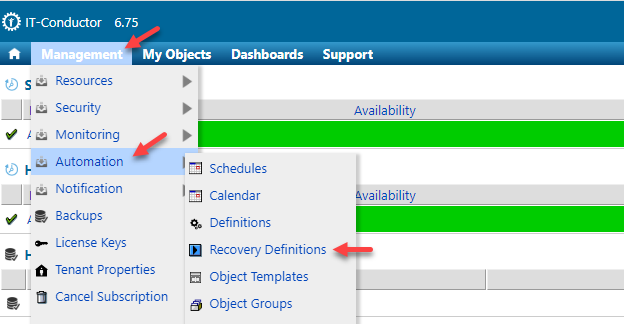
* The [Robot User](https://docs.itconductor.com/user-guide/account-administration/create-robot-users) should be able to view the following recovery definitions when navigating to **Management → Automation → Recover Definitions**.
  * Reset Inbound tRfc Queue
  * Restart Inbound tRfc Queue
  * Restart Outbound tRfc Queue

<figure><img src="https://377464071-files.gitbook.io/~/files/v0/b/gitbook-x-prod.appspot.com/o/spaces%2FXhp08OmU8050PePmMgDt%2Fuploads%2FpczhgpQwH1UWV773laMb%2FNavigating%20to%20Recovery%20Definitions.png?alt=media&#x26;token=03ea9afc-5b4a-4494-bbc7-d6339a2316a3" alt=""><figcaption><p>Figure 3: Navigating to Recovery Definitions</p></figcaption></figure>

<figure><img src="https://377464071-files.gitbook.io/~/files/v0/b/gitbook-x-prod.appspot.com/o/spaces%2FXhp08OmU8050PePmMgDt%2Fuploads%2FGLsq9ymIZW5vXqsjXISw%2FList%20of%20Recovery%20Definitions.png?alt=media&#x26;token=833d2903-a859-4759-a607-e60b6328abf5" alt=""><figcaption><p>Figure 4: List of Recovery Definitions</p></figcaption></figure>

{% hint style="info" %}
**Note:** If the recovery definitions are not available for use, contact [IT-Conductor Support](https://docs.itconductor.com/reference/support).
{% endhint %}

### Automate Inbound/Outbound Queue Restart <a href="#how-to-automate-inbound-outbound-queue-restart" id="how-to-automate-inbound-outbound-queue-restart"></a>

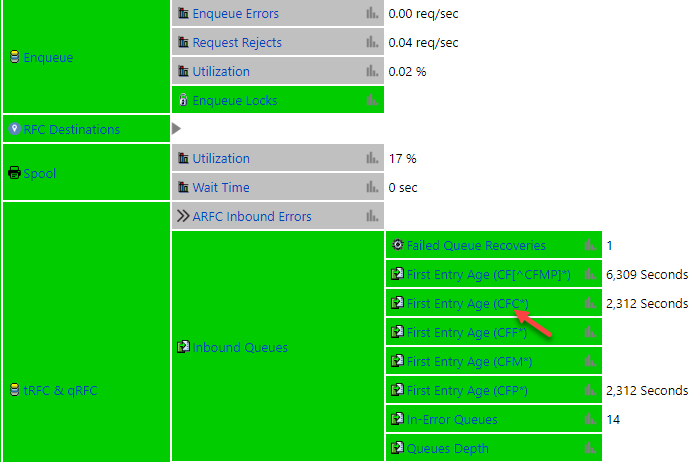
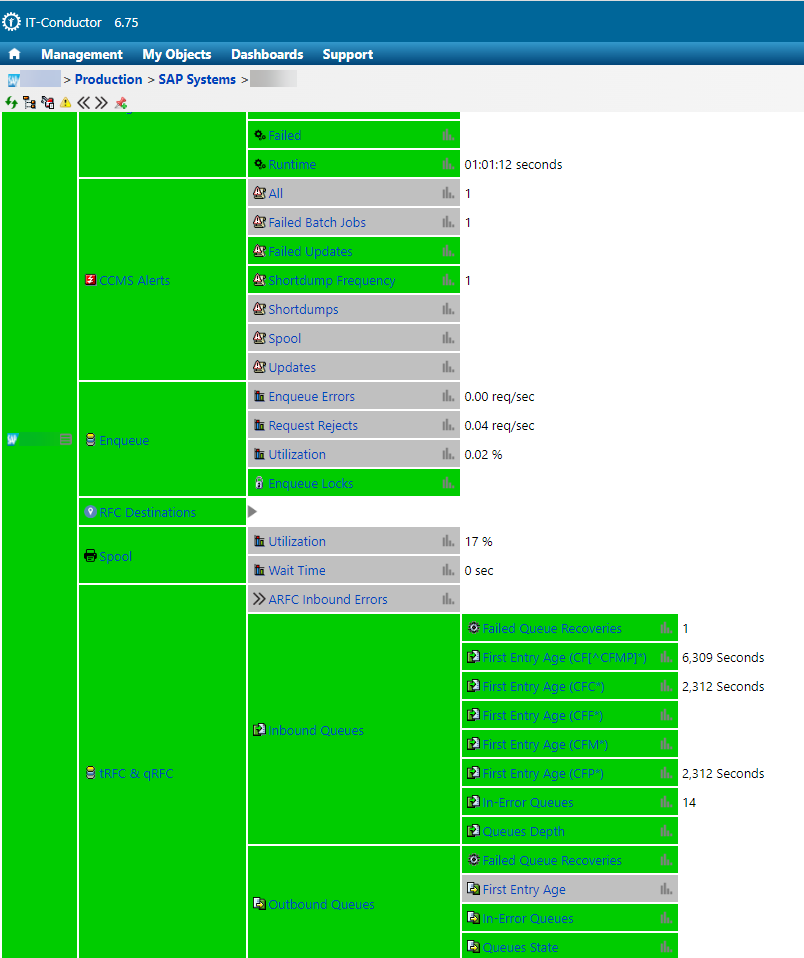
1. Select the Inbound Queue to implement the restart automation.

<figure><img src="https://377464071-files.gitbook.io/~/files/v0/b/gitbook-x-prod.appspot.com/o/spaces%2FXhp08OmU8050PePmMgDt%2Fuploads%2FuFSG8AjGnJ4AzfACCAFD%2FInbound%20Queues%20in%20IT-Conductor%20Service%20Grid.png?alt=media&#x26;token=83c86f50-ea52-482f-b709-7db097c9de50" alt=""><figcaption><p>Figure 5: Inbound Queues in IT-Conductor Service Grid</p></figcaption></figure>

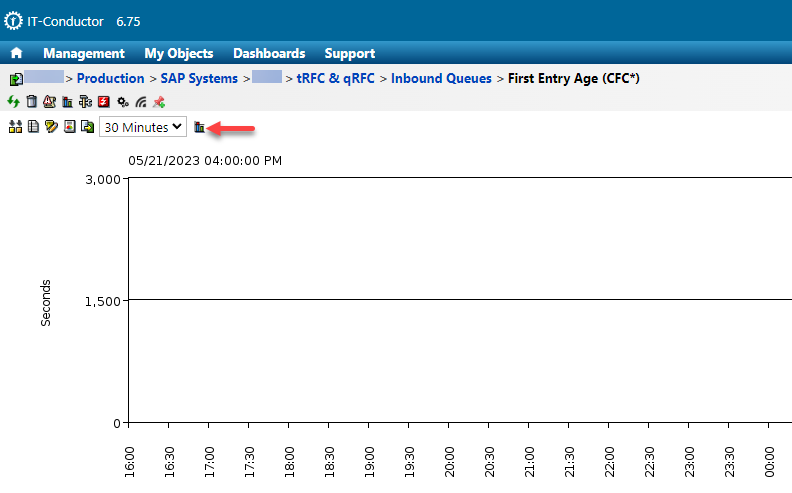
2. Click **Threshold Overrides** <img src="https://377464071-files.gitbook.io/~/files/v0/b/gitbook-x-prod.appspot.com/o/spaces%2FXhp08OmU8050PePmMgDt%2Fuploads%2FbrOs2LgoCZkn2KqyAzJe%2Fthresholds-icon.png?alt=media&#x26;token=c01242d8-2d2e-473a-a805-94469eb794d9" alt="" data-size="line">.

<figure><img src="https://377464071-files.gitbook.io/~/files/v0/b/gitbook-x-prod.appspot.com/o/spaces%2FXhp08OmU8050PePmMgDt%2Fuploads%2FfKiJlAoUnfORwjxemCQY%2FFirst%20Entry%20Age.png?alt=media&#x26;token=acdd5cf5-3177-4cbf-a5ac-83a6eed7f897" alt=""><figcaption><p>Figure 6: First Entry Age</p></figcaption></figure>

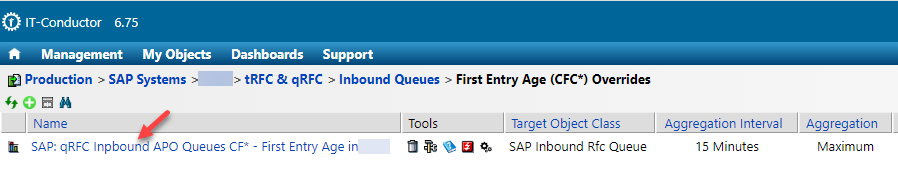
3. Select the targeted override.

<figure><img src="https://377464071-files.gitbook.io/~/files/v0/b/gitbook-x-prod.appspot.com/o/spaces%2FXhp08OmU8050PePmMgDt%2Fuploads%2FBhxmcsSPoj5C7aJp2UeY%2FFirst%20Entry%20Age%20Overrides.png?alt=media&#x26;token=c23f8331-7afc-48f0-ad08-bb95b82731e7" alt=""><figcaption><p>FIgure 7: First Entry Age Overrides</p></figcaption></figure>

4. Configure the threshold and define the desired schedule for running the restart automation.

<figure><img src="https://377464071-files.gitbook.io/~/files/v0/b/gitbook-x-prod.appspot.com/o/spaces%2FXhp08OmU8050PePmMgDt%2Fuploads%2FyGw7iHpTCXoLmSHPmuDv%2FFirst%20Entry%20Age%20Configuration%20Settings.png?alt=media&#x26;token=a49c8e5f-852b-4e68-b479-c06eaf07e20d" alt=""><figcaption><p>Figure 8: First Entry Age Configuration Settings</p></figcaption></figure>

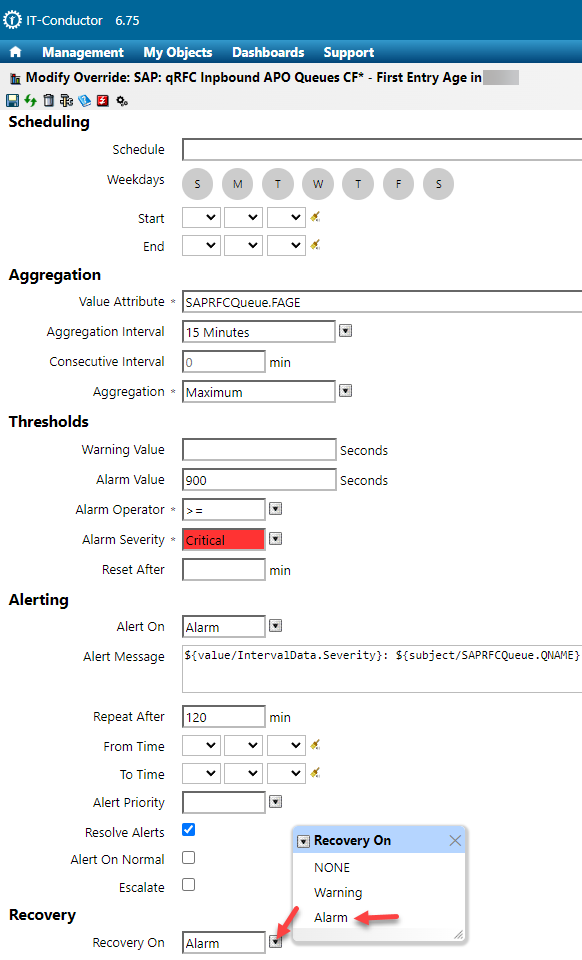
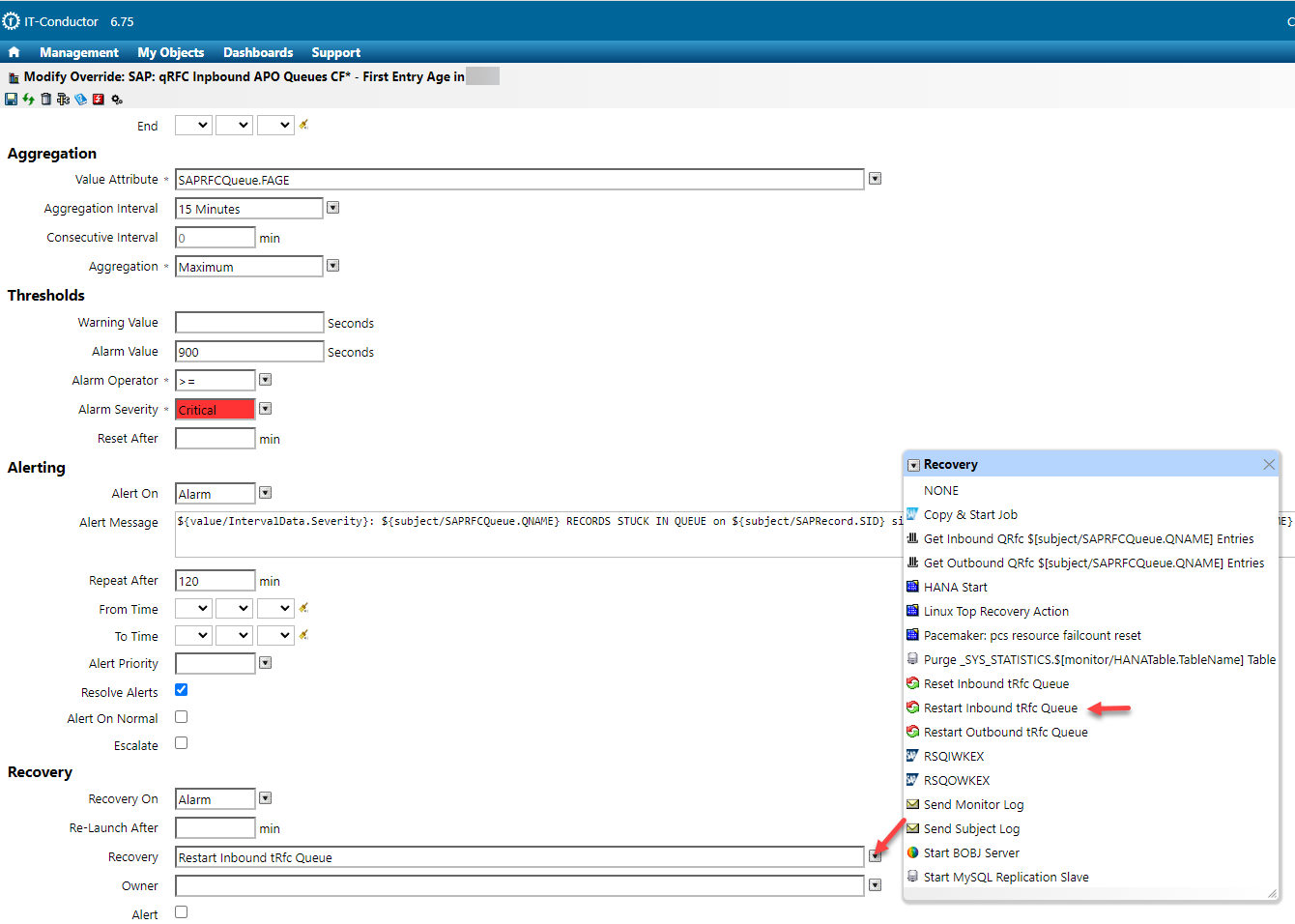
5\. Select the desired recovery action in the **Recovery** dropdown menu.

<figure><img src="https://377464071-files.gitbook.io/~/files/v0/b/gitbook-x-prod.appspot.com/o/spaces%2FXhp08OmU8050PePmMgDt%2Fuploads%2FLMHmnKW93LKsWgDXPaNY%2FSelecting%20Recovery%20Action.png?alt=media&#x26;token=56dc91cf-7519-4aef-a321-72fc83e1a08b" alt=""><figcaption><p>Figure 9:Selecting Recovery Action</p></figcaption></figure>

{% hint style="info" %}
**Note:** If the recovery definitions are not available for use, contact [IT-Conductor Support](https://docs.itconductor.com/reference/support).
{% endhint %}

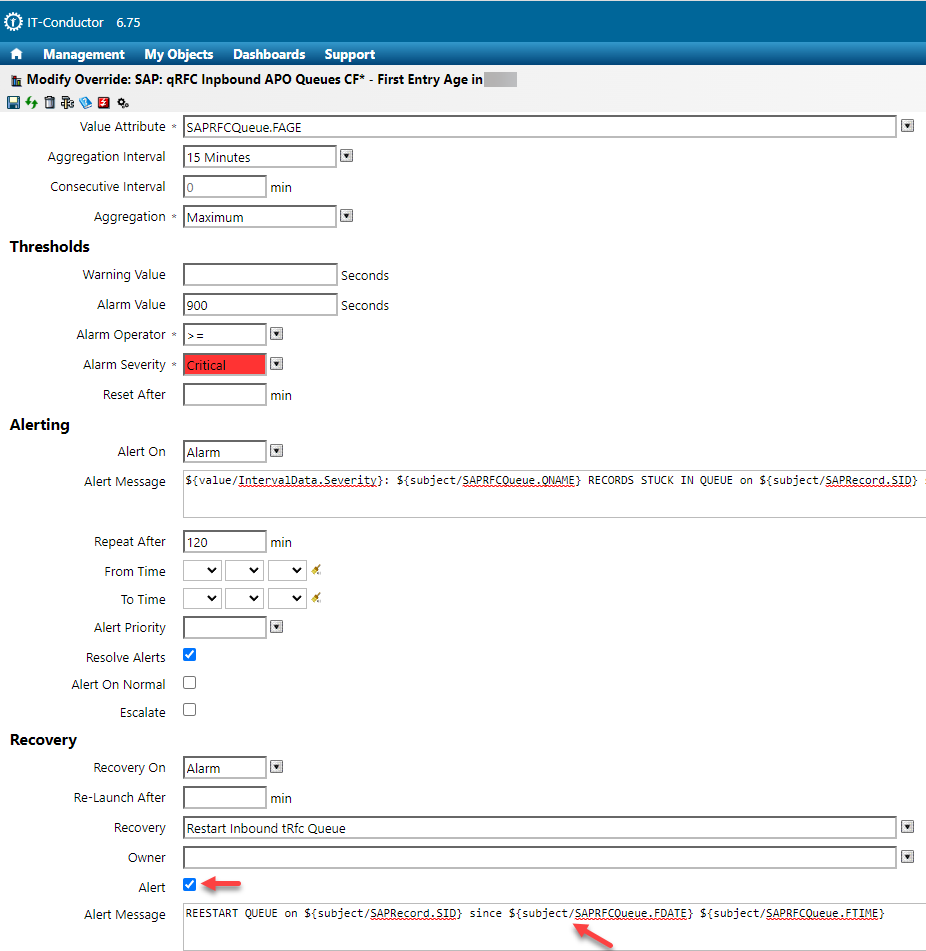
6. Configure to send a notification for this event. (Optional)

<figure><img src="https://377464071-files.gitbook.io/~/files/v0/b/gitbook-x-prod.appspot.com/o/spaces%2FXhp08OmU8050PePmMgDt%2Fuploads%2FgofhmcbY4R2vmhRRQOQx%2FConfiguring%20Recovery%20Notification.png?alt=media&#x26;token=088a9082-4180-4fa0-a997-f01a15b6087e" alt=""><figcaption><p>Figure 10: Configuring Recovery Notification</p></figcaption></figure>

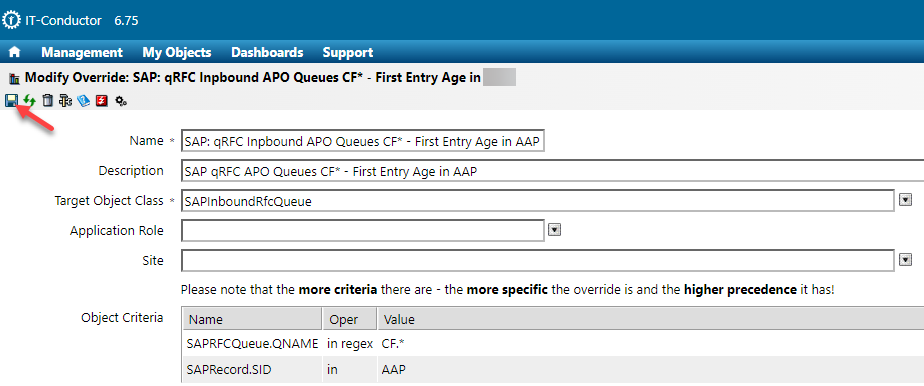
7. Click **Save** to complete the restart automation.

<figure><img src="https://377464071-files.gitbook.io/~/files/v0/b/gitbook-x-prod.appspot.com/o/spaces%2FXhp08OmU8050PePmMgDt%2Fuploads%2F1B0o4AYLZFn4j7emPLiB%2FSaving%20the%20Recovery%20Configurations.png?alt=media&#x26;token=0fe9d537-50f8-487d-92b9-63fdb819fd3c" alt=""><figcaption><p>Figure 11: Saving the Recovery Configurations</p></figcaption></figure>

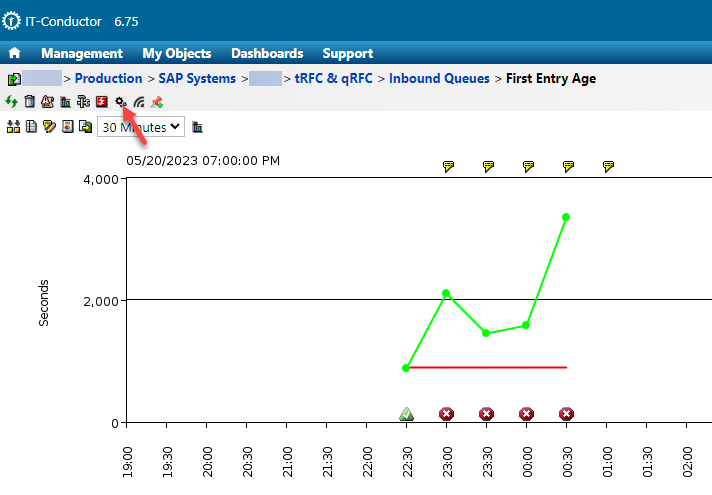
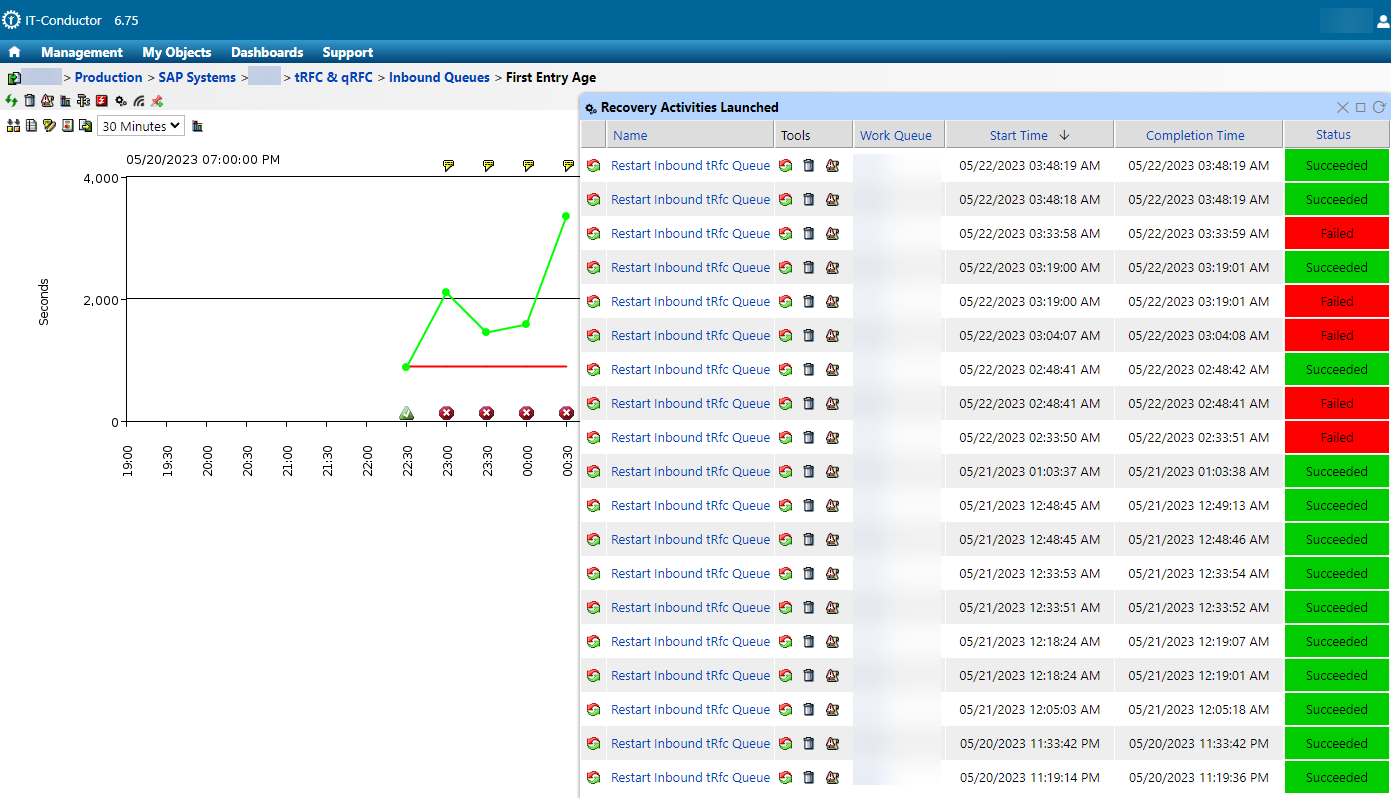
### View Recovery Activities <a href="#how-to-view-recovery-activities" id="how-to-view-recovery-activities"></a>

1. Click the **Recovery Activities Launched** /icon.

<figure><img src="https://377464071-files.gitbook.io/~/files/v0/b/gitbook-x-prod.appspot.com/o/spaces%2FXhp08OmU8050PePmMgDt%2Fuploads%2FQzhGQGDYlL6b9NVaC5X3%2FNavigating%20to%20Recovery%20Activities%20Launched.png?alt=media&#x26;token=0f14f709-ecca-4db1-9a07-9077819f77e5" alt=""><figcaption><p>Figure 12: Navigating to Recovery Activities Launched</p></figcaption></figure>

<figure><img src="https://377464071-files.gitbook.io/~/files/v0/b/gitbook-x-prod.appspot.com/o/spaces%2FXhp08OmU8050PePmMgDt%2Fuploads%2FbZspXyJwVs6U67iuHKKy%2FRecovery%20Activities%20Launched.png?alt=media&#x26;token=0fbcdc7c-1f12-4764-ad31-338eeb39ceee" alt=""><figcaption><p>Figure 13: Recovery Activities Launched</p></figcaption></figure>

### Related Information <a href="#related-articles" id="related-articles"></a>

Access the technical description for restarting Inbound/Outbound Queues from SAP Notes:

* [1804549 - Restarting Inbound SYSFAIL, RETRY, CPIERR and RUNNING Queues](https://me.sap.com/notes/0001804549)
* [1804597 - Restarting Outbound SYSFAIL, RETRY, CPIERR and RUNNING Queues](https://me.sap.com/notes/1804597)
* [1483845 - Using the report RSARFCEX](https://me.sap.com/notes/1483845)